Idyll Dreams & Nonsensical Things

The random thoughts and whimsical writings of Cari Lyn Jones

I hope you’ve found the posts interesting so far! Of course, there are many, many, many more goblins which I did not mention (no offence intended!).

This is the final post of The Goblin Host, but next week’s will be about one of my favorite goblins – the phooka – shapeshifting tricksters of which there have been many a tale told.

One of the phooka’s favorite shapes is that of a wild pony.

Until then, here are a few more denizen’s that you might find in the Goblin King’s court…

Gruagach – Fair or haggard, male or female, clothed or naked, gruagachs have been described many different ways, but one thing they all have in common is their long hair. They would often help with work around the farm yard, such as minding cattle or threshing grain. Curiously, female gruagach have sometimes been associated to water, and will appear dripping wet even on the sunniest of days.

Loireag – Found in Scottish lore, this plain, diminutive fairy of the Hebrides is a patroness of spinning; and can be fiercely insistent that all rituals associated with such (spinning, warping, weaving and washing) be followed correctly. Loireag have sweet voices, often singing as they go about their tasks.

Bao Sith – Beautiful fairy women in Scottish lore who are said to have much in common with vampires and succubus. Seducing mortal men who are away from home to dance with them through the night. Only to disappear when the morning comes; leaving their victims to be found drained dry of blood. Much like glastigs, they often wear long flowing green dresses to hide their feet, which are in the shape of deer’s hooves.

Piskies – Cornish fairies who tend to be older, shorter and more wizened looking than the British pixy. They enjoy mischief making, and take great delight in leading people astray. They have also been known to take horses out for wild rides late at night, galloping them around in circles called “gallitraps”. They are not always troublesome and have been known to help those humans that are their favorites. They are most often seen dressed in red or green, clothes of those color being favored by the Good Folk.

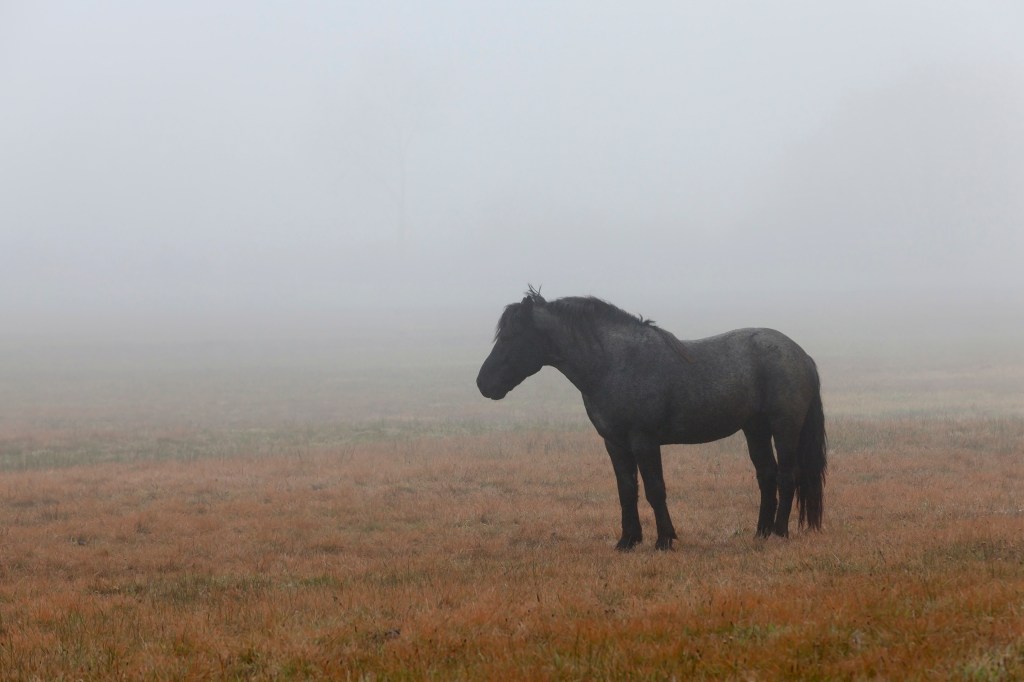
Photo by Pixabay on Pexels.com

Thanks for reading! And if you want to read more about the Good Folk, here are some suggestions…

The Encyclopedia of Celtic Mythology and Folklore
By Patricia Monaghan

An Encyclopedia of Fairies: Hobgoblins, Brownies, Bogies, & Other Supernatural Creatures
by Katharine Briggs

Encyclopedia of Fairies in World Folklore and Mythology
By Theresa Bane

Faeries by Brian Froud and Alan Lee

Spirits, Fairies, Leprechauns, and Goblins – an encyclopedia by Carol Rose

The Raven’s Bride is a retelling of Howard Pyle’s “Princess Golden-Hair and the Great Black Raven” which appeared in his book The Wonder Clock published in 1887.

If you have ever read the original, you will find many of the elements changed in my telling of it; although I don’t think I would go so far as to call it a reimagining. Whether you are a fan of the original or have never heard of it before in your life, I hope you will enjoy my telling of The Raven’s Bride.

Just a quick reminder, all these tales are unedited, so there will be typos and grammatical errors, and all artwork is still conceptual or in progress. Still, I hope you have as much fun reading them as I had writing them!

And now…

The Raven’s Bride

Part 1 of 3

There was once a great king who had three daughters. All were beautiful but it was his second daughter, Aurelina, who was often called Princess Golden-hair for her hair was as bright and shining as spun gold.
It happened one day, that the king was out hunting in a great wood when, through no fault of his own, he was separated from his huntsmen. On and on he rode, becoming less sure of his way as the trees crowded closer and closer together. Soon the branches above him were thick enough to block out the sky and the wood around him as dark as night.
As he came around a bend he found a great black raven on the path before him. It stood nearly as tall as the king’s horse, and its feathers were as black as soot. The eyes that regarded the king glowed like burning coals.
“Where are you headed, your majesty?” asked the Raven.
“I can not say,” the king replied, “for I am not sure where I am. In fact I am quite lost.”
“Ah, I can help you,” the Raven assured him. “I will lead you out of this wood, if you will consent to give your golden-haired daughter to me as my bride.”
Of course, the king refused.
“As you will,” said the Raven. “But I promise you will not find your way from this wood without me.”
Again, the king refused.
The Raven nodded. “Well good luck to you then, and if you change your mind you have only to call out to me and I will be there. But do not take too long or there will nothing left of you for me to lead out.” And with that, the Raven flew off.

The king wandered for three days, and the truth of the Raven’s words bore out, for no matter how far he went he could not find his way out of the dark wood. Hungry, thirsty, and fearing for his kingdom, the king relented, calling out to the Raven.
As promised, the Raven appeared.
“If my daughter were to become your bride, do you promise no harm will come to her? And that you will take care of her and treat her well?” the king asked. When the Raven assured him that it would be so, the king agreed to give the Raven his daughter as a bride. With that the Raven spread his great wings and bade the king follow as he took to the sky. The king followed and true to his word, the Raven lead him safely out of the forest.
“I will come for my bride tomorrow,” said the Raven flying back toward the wood.
When the morning came, the Raven was waiting outside the castle gates. But when the time came, the king found that he could not give up his daughter. So, he had the swineherd’s daughter dress in one of the princess’s dresses and sent her out in her stead. After all, the king reasoned with himself, a raven would not be able to tell the difference between a swineherd’s daughter and a princess.

The Raven flew away with the swineherd’s daughter on his back. On and on he flew, over flowering meadows and rolling hills and great wide rivers, until he finally brought her to a rude hut perched atop a bleak hill. There was not a soul to be seen for miles, only a great flock of birds of all different kinds wheeling above the hut’s meager roof.
There the Raven landed. “Here is our home,” he said and bade the girl go in and refresh herself.”
When she went inside, she found a wooden table. On it was a golden goblet of good red wine, a silver cup of cider and a earthenware jug full of bitter beer. Tired and concerned for her future, the swineherd’s daughter went straight for what she knew, picking up the earthenware jug of bitter beer she took a long drink. It was then that the Raven knew it wasn’t the princess who stood before him, what princess would be content with a jug of bitter beer when a golden goblet of good red wine was at hand?
“Come, I will return you to your home for you are not the bride I seek,” said the Raven and bade her climb on his back. Away he flew, back over the flowering meadows and rolling hills and great wide rivers until he was once again at the castle gates.
“King!” said the Raven in a great voice. “This is not the bride I seek, send out my true bride as we agreed or you and your people will suffer for it!”
The king felt a shiver of fear run down his back for he did not doubt what the Raven said.
“Come tomorrow and you will have your true bride,” said the king.

When the morning came, the Raven was once again waiting outside the castle gates. Still, the king could not bring himself give up his daughter. Instead, he had the steward’s daughter dress in one of the princess’s dresses and sent her out to meet the Raven. After all the king reasoned with himself, a steward’s daughter is fine enough of a raven.
So, the Raven took the steward’s daughter on his back, and away they flew, back to the isolated little hut on the bleak hilltop. Into the hut went the steward’s daughter, where she found the wooden table with its golden goblet of red wine, silver cup of cider and earthenware jug of bitter beer. Tired and concerned for her future, the steward’s daughter went straight for what she knew. Picking up the silver cup of cider, she took a long drink. It was then that the Raven knew it wasn’t the princess who stood before him. What princess would be content with cider when good red wine was at hand?
“Come,” said the Raven, “back we go again, for you are not the bride I seek.”
So, the Raven flew back to the castle carrying the steward’s daughter with him. When he landed, he called out in a great and terrible voice. All who heard it shivered with unreasoning fear, gooseflesh rising up along their skin as if someone had just walked over their grave.
“So king, this is how you would treat with me! You promise me one bride and send out another. I will come tomorrow for my true bride and if you do not send her out I will bring the castle down around your head and pick the eyes from your skull!” with that dire warning still ringing through the air the Raven flew away. But all who had heard him knew he would be back the next morning.
The king realized there was no way around his promise. When he went to his daughter, Aurelina, and told her of what he had promised she was quite understandably upset. The rest of the day and night she sat weeping in her chambers. Her sisters’ sat with her, comforting her as best they could. But truth be told, deep in their hearts each of them was relived that it was not herself who was to be the Raven’s bride.

The day dawned clear and bright. Princess Aurelina’s hair was like a rippling sheet of gold in the morning sun as she climbed onto the Raven’s back, her eyes still red rimmed from weeping the day before. The great Raven spread his wings and carried her up into the sky. Aurelina did not see all the land that they passed over, her eyes still filled with tears. When they reached the rude little hut with its flock of birds wheeling overhead, she was so tired from weeping that she did not wait, but slid down from the Raven’s back straight away and went into the tiny hut. Seeing the golden goblet of good red wine on the table, she went to it straight away and drank, without even a second thought as to how such a thing would come be in a crude little hut in the first place.
Wonder of wonders, as soon as she drank the little hut began to grow and change transforming into a great castle. Its walls were made of alabaster and its rooftops were of silver. The flock of birds that had been circling in the air above changed as well becoming courtiers and servants and men-at-arms. They all cheered as they gathered around the princess and the Raven. But the Raven was no longer there, in its stead stood a man, tall and fine, in an elegant coat. His hair was as black as the raven’s feathers. However unlike the raven, his eyes did not glow like burning coals, but instead were a warm, lovely hazel.
“You were the bride I sought,” he said taking her hands in his. “It was only when you drank from the golden goblet that my people and I were released from the evil spell placed on us by my stepmother. And now I can ask you properly, will you marry me?”

The princess agreed and so their courtship began. Aurelina could not have wished for more, for the Raven King was very thoughtful and kind to his bride-to-be. They spent many a happy day in each other’s company. But as the time for their wedding grew closer, Aurelina found that she missed her father and sisters, and she told as much to the Raven King, sharing with him her dream to visit them.
“Only misfortune will come from such a visit,” he warned, clearly unhappy. “But I would see you happy, so if you are set on this course, I can not deny you.”
So the princess made ready for her trip. Before she left, her husband-to-be gifted her with a napkin made of the finest linen.
“If there is anything you want, anything at all, spread this napkin out on the ground and wish for it; straight away it shall appear. There is only one thing you must not wish for,” he cautioned. “Do not wish for me to appear. If you do, misfortune will come of it and there will be a price to pay.”

So Aurelina set off to her father’s house in an ebony coach pulled by four silver-gray horses. She was accompanied by a full retinue of courtiers and servants, all dressed in the fine livery of the Raven King’s house. They made a splendid sight, and it was not long before her father and sisters heard about the grand lady that traveled through their land. Weren’t they surprised when it turned out to be the princess they had thought lost to them.
Her father, the king, was so happy to see her! And to hear about the fine husband she was to have and the grand home they lived in. It gladden his heart to know that his daughter had come out the better for the bad deal that he had been forced to make. Her sisters, however, soon tired of hearing about how wonderfully kind, thoughtful, and handsome their sister’s husband-to-be was. And to be honest, Aurelina did go on a bit more than was polite, finding that she missed her betrothed terribly. But it was not truly her chatter that turned her sisters’ hearts against her. Rather it was that they were secretly envious of her happiness. Each feeling that she might have had this for herself if only the Raven Prince had asked for her instead of their sister, Aurelina.
“Yes, yes, such a wonderful husband you’ll have,” said her elder sister. “Almost too good to be believed.”
“True!” her younger sister agreed. “Why is he not with you, dear sister? It makes one wonder.”

And so they went on, their words subtle and spiteful. After several days of this, it became too much Aurelina to bare. So, even though he had warned her against it, she laid the napkin on the ground and wished for the Raven King to appear.
No sooner had she wished it, but there he stood. And her sisters had nothing to say then, because he was all that they had been told and more. But he did not look at anyone else, only Aurelina and his face was both angry and sad.
“I told you there would be a price to pay if you called me to you and now we will both pay it. A geas is on me and I have no choice but to go and I cannot bring you with me. Though my heart might break from it. I doubt you will see me again,” that said he stooped to pick up the napkin on which he stood and was a raven once more. Spreading his great wings, he flew off.
At the same time, Aurelina’s fine ebony coach vanished, and all of her retinue changed into birds once more. They flew off as well, following their master. But, Aurelina paid no attention to that save to note what direction they flew off in. Without a word to her sisters, she tucked up her skirts and headed off the way she had seen her beloved go, determined to find him despite his dire prediction.

To be continued in The Raven’s Bride Pt. 2

To pick up where we left off…

Shellycoat – a water bogie who haunts the coasts and rivers of Scotland, so named because of the coat of shells he wears. He finds great fun in leading travelers astray, although he is most often considered to be mischievous rather than malevolent.

Cu Sith – Fairy dogs appear in the lore of many different lands, and each has its own name for them. How they look varies as well. Sometimes they are great white hounds with red ears. Sometimes they are seen as huge black dogs with glowing eyes. However, the Cu Sith of the Scottish highlands has to be one of the most interesting I have found. They are as large as a good-sized calf or small cow, with vermilion eyes and shaggy dark green coats. And if you should come across him in Lumina and the Goblin King, this is how he would appear to be.

They can be harbingers of disaster and sometimes will foretell a man’s doom.

Hogboon – A mound dweller of the Orkney Isles, this goblin can be helpful if shown the respect he feels is his due, or bring great misfortune if he is not.

Bucca – a Cornish hobgoblin that sometimes is said to inhabit tin mines and sometimes likened to a Brownie. However, they are also mentioned in association to storms and the sea. Fisherman will often leave offerings of fish on the shore in hopes of their good regard.

I haven’t often run across them in my reading, but they are worth looking into further if you have the time.

Brownie – A household spirit often found in English and Scottish lore. They are very small, brown as a nut, and have no nose to speak of. Their clothes are often ragged, if they wear any at all. They help about the house and farm, often taking on the most tedious tasks. The only payment needed for all their hard work is a bowl of cream and a slice of bread or cake. However, their help can be easily lost if the work they do is criticized. And they may even undo all that had been done, adding more work to it besides if they feel the slight they were given warrants it.

Barguest – A bogie found in Northern England, it is often described as a great black dog bound in chains, with glowing eyes, huge claws, and on occasion, horns. It can sometimes appear as a headless man or woman. Which is the form I pictures when I was writing the scene where Lumina gets her first peak at the goblin’s market, through the Mirror Gate.

Curious to learn more? Then I hope you’ll join me for my next post. Until then, here are some resources that I have used that might go a ways to satisfying your curiosity:

The Encyclopedia of Celtic Mythology and Folklore
By Patricia Monaghan

An Encyclopedia of Fairies: Hobgoblins, Brownies, Bogies, & Other Supernatural Creatures
by Katharine Briggs

Encyclopedia of Fairies in World Folklore and Mythology
By Theresa Bane

Faeries by Brian Froud and Alan Lee

Spirits, Fairies, Leprechauns, and Goblins – an encyclopedia by Carol Rose

“The hall opened up before her, golden and bright. Dancers filled its jasper floors, swirling between the agate pillars. The whole of her vision was consumed by them as they gamboled past. Their vague features were smudged and undefined, revealed only in flashes. A kaleidoscope of pictures falling like leaves before her eyes; a donkey’s nose, an ox’s horns, a fox’s tail, or a raven’s eye. Some with faces like angels, others as wrinkled as old trees. The goblins laughed and cried and belled and roared as they danced to the fiddler’s wild tune.” – excerpt from Lumina and the Goblin King

“Goblin”… “Fairy”… I’ve often found these terms used interchangeably. Though it seems in most lore that the term “goblin” is usually given to those fae creatures who take delight in making mischief for mischief’s sake, and those that tend towards the doing of darker deeds (at least certainly as far as humans would be concerned).

With the idea of making the distinction between the courts easier within the book, all those creatures who gather beneath the Goblin King’s banner are called “goblins”. The ones you’ll meet are many and varied; and though not necessarily evil, they are the less lovely denizens of fairy and often have more earthy, even bestial natures. Many of them are also not the ones most often read about.

So with that in mind, I am going to follow a piece of very wise advice that was given to me and make some introductions over the next couple of posts.

So without further ado…

Bogels – a somewhat generic term for many types of goblins whose temperament varies from irksome to truly malicious.

Boomen – a hobgoblin of the Orkney and Shetland islands. Similar in nature to a Brownie (a common name for a house fairy).

Bodach – this goblin will creep down the chimney to pinch or poke naughty children while they sleep, filling their dreams with nightmares or stealing them from their beds entirely.

Henkies – short, squat trows (trolls) of the Orkney or Shetland islands. They love music and come out at night to dance around earthen mounds, called Henkie knowes. Henkies limp (or henk) as they dance, hence the name.

Glastigs – a water fae, she haunts lakes and rivers, luring men to dance with her before draining them of their blood. Her goat legs are hidden beneath a long flowing dress of green. She has another side, as fae often do, and is sometimes known to watch over cattle, and in turn, the children and elderly who look after the herds.

Powries – much like Red Caps, these goblins haunt old watch towers and the edges of ancient battlefields, wherever a great deal of blood has been spilled. They are murderous folk who take delight in rolling boulders down on unwary travelers.

Muilearteach – a blue-faced hag similar to the cailleach bheur who is born every Samhain with her the dark months of winter.

Wulver – a man with a wolf’s head found in the folklore of the Shetland islands. Benevolent, so most say. He might even share a fish or two with those who need.

Curious to read more about the Goblin King’s host? Then I hope you’ll join me for my next post where I will continue on with the introductions. Until then, here are some resources that I have used that might go a ways to satisfying your curiosity:

The Encyclopedia of Celtic Mythology and Folklore
By Patricia Monaghan

An Encyclopedia of Fairies: Hobgoblins, Brownies, Bogies, & Other Supernatural Creatures
by Katharine Briggs

Encyclopedia of Fairies in World Folklore and Mythology
By Theresa Bane

Faeries by Brian Froud and Alan Lee

Many tales mention the the two courts of Faerie. Sometimes they may be called the Seelie and the Unseelie, or perhaps the Summer Court and the Winter Court. Neither is wholly good nor wholly bad, though for humans, neither is wholly healthy.

In Lumina and the Goblin King there are two courts as well. Though I chose not to name them, for a good reason. With names, come expectations and I didn’t want to limit the story that way.

Of the two courts with which Lumina must contend, one owes its allegiance to the Goblin King; the other to the Fairy Queen, and never shall the two in friendship meet. The enmity between them is long standing, with good reason as you will learn.

The Fairy Queen’s court resides Underhill where the crystal trees grow but cast no shadows. While the dark walls of the Goblin King’s keep with its crimson banners and river of clouds, stands at the edge of the goblin’s city. Though truthfully, they are both in the land of faerie, and as such do not bend to the natural laws of the mortal realm, but rather serve as a reflection of those who rule them.

Ah, I can’t wait for you to read about them!

If your interest is piqued or you just want to learn more about fairies, goblins and the like, then here are some resources that I have used that might go a ways to satisfying your curiosity:

The Encyclopedia of Celtic Mythology and Folklore
By Patricia Monaghan

An Encyclopedia of Fairies: Hobgoblins, Brownies, Bogies, & Other Supernatural Creatures
by Katharine Briggs

Encyclopedia of Fairies in World Folklore and Mythology
By Theresa Bane

Faeries by Brian Froud and Alan Lee

Don’t steal from the goblins…

Because every debt comes due, eventually. And even deeds done with the best intentions often come at a price. Some things are worth the price though, what ever it might be.

A dying kitten and a rash decision will lead one kind-hearted sprite to make that choice. She will learn a debt to the Goblin King is no small thing.

Caught up in an age old enmity between the Fairy Queen and the Goblin King, she will soon come to understand that even small pebbles can make large waves, and that every tale has more than one telling.”

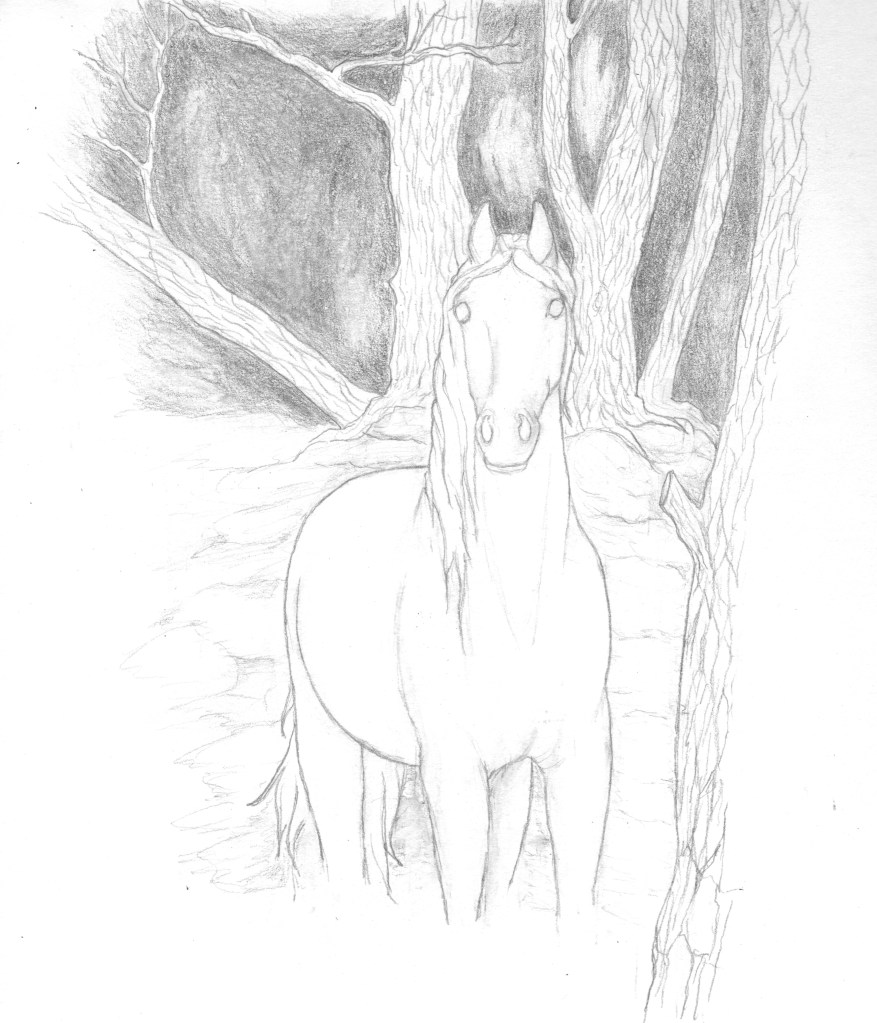
Concept sketch of the cover for Lumina and the Goblin King. Look for the cover reveal in September 2020

Lumina and the Goblin King is my first full length novel. And as I mentioned above, there will be a host of goblins, fairies, elementals and the like, plus one opinionated cat.

All over the world, stories are told of the Good Folk in one form or another (though for Lumina and the Goblin King, I drew mostly on Scottish and Irish lore). And there is certainly one thing that is very clear; fairies are rarely flighty things that do no harm. They are beautiful and terrible… and they do not think as mortals do.

For some readers, the creatures they’ll meet within the book’s pages will be old friends, for others, new ones. But whether old or new, it might be that introductions are in order. Because, like all storytellers, I’ve taken some liberties with the lore I found in order to set the stage for the story I wish to tell.

To that end, I hope you will come back to visit my blog as I post more about the Good Folk and the unexpected inspirations that led me to write Lumina and the Goblin King.

Until then…

As I mentioned previously, one of my current projects is writing a series of fairytales, some original, some reimaginings of lesser known tales which I plan to post over the next several months. And since my daughter’s birthday is this month, I decided to start with her favorite, Daughter of the Sea.

Just a quick reminder, all these tales are unedited, so there will be typos and grammatical errors, and all artwork is still conceptual or in progress. Still, I hope you enjoy reading them as much as I enjoyed writing them!

And now…

Daughter of the Sea

There was once a young fisherman and his wife who lived in a cottage at the edge of the sea. The life they had chosen was not easy, but they were happy in each other’s company and content in all things save one, they did not have a child.

This thought was ever on the young wife’s mind. It made it so that she rarely slept and could most often be found walking along the shore, with only the light of the moon and stars above her. With each passing day her heart grew heavier, until one fateful night, it seemed too much for her to bare. She began to walk out into the sea, resolved to let the waves drag her down into that forever sleep. But just as her foot touched the water, she heard the softest cry.

The sound caught her ear, and she turned away from the ocean, walking along its edge instead until she came to a tidal pool. There, swaddled in seaweed, she found a tiny baby girl. A necklace hung from around her neck and on it was a shimmering scale.

The young wife brushed the baby’s soft cheek. The baby cooed happily, and she knew right then that she could not leave the babe there all alone. So, although she was not sure whether it was the right thing to do, she took the child. Cuddling it close as she carried it away from the sea, back towards the little cottage she shared with her husband.

Time passed. And as will often happen, the young fisherman and his wife grew to be an old fisherman and fishwife. And their daughter, for that is what they told people, grew as well.

The couple had been gifted with three fine sons over the years, all of which they were very proud of. Still, the child the sea had given them was their only daughter and the fisherman’s wife loved her dearly.

The girl had grown to be a lovely young maid, with wild dark hair and eyes as gray as storm-tossed waves. Her mouth was generous, and she often smiled. But of all those things, it was her voice for which she was best known. For no one who ever heard her sing could forget it. And she often sang while she walked along the shore, gathering seaweed for her mother’s soup and searching for treasures in the sand.

That was exactly what she was doing on that day while storm was brewing overhead, its dark roiling clouds turning everything to the color of slate. The waves bucked wildly along the sand, cresting high above the sea, before crashing down into mountains of foam. The wind was blowing full in her face, stinging with salt and sand.

This bothered the fisherman’s daughter not at all. She laughed at the wild ocean and sang with the frigid wind as it stroked her face and tangled her hair. She continued on her way happily down the strand.

She thought herself alone, until, to her surprise, she saw a milk white horse some little ways in front of her, standing in the waves and sea spray. It was long and lean. Its mane and tail lank and dripping with sea water.

Although she was curious, she did not think too much of it. After all, it was not uncommon for a horse to wander along the shore.

But the horse did not wander, instead its head was turned towards her, as if waiting. And when she walked passed him, he turned to follow at her side. When she reached her hand out towards him, he did not shy away, just continued walking beside her. He had such a gentlemanly manner that she felt it safe to touch his shoulder; the coat beneath her fingers was short, and as soft as seal fur.

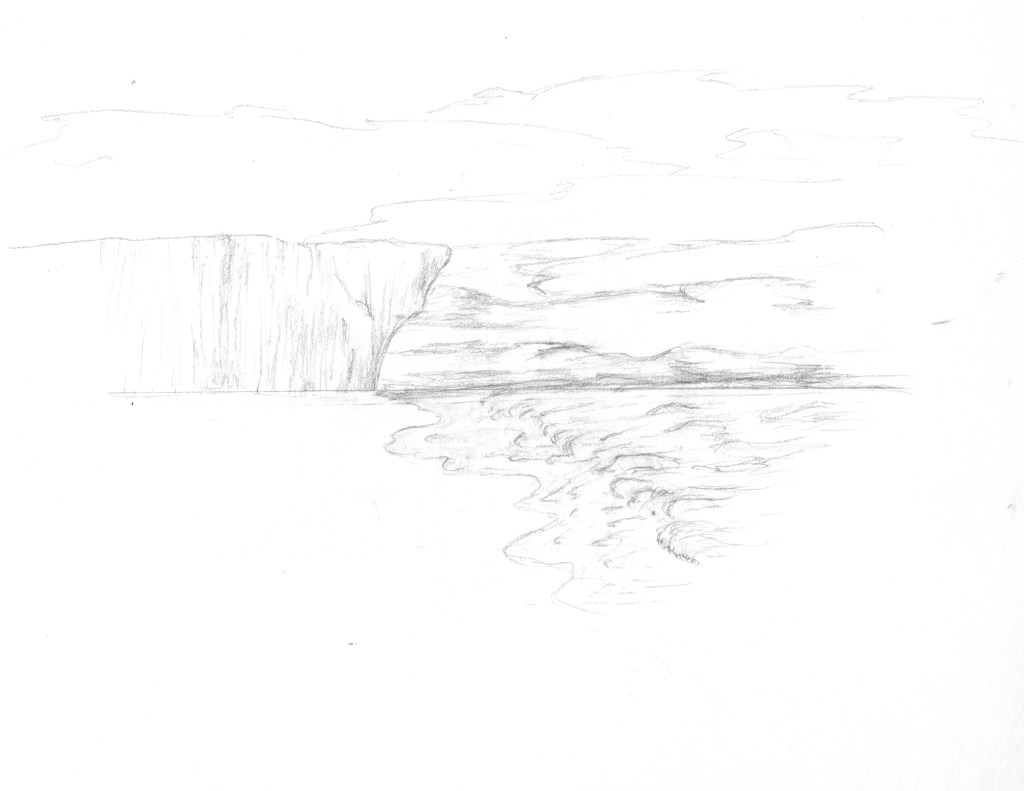
They walked companionably down the beach until they reached the sea cliffs that pointed out like a giant’s finger into the storm-tossed water. There the stallion, for a stallion he certainly was, stopped and turned to look at her. His eyes, green as beryls, regarding her for a moment, before bowing of his head to her. He turned and with a flick of his tail, trotted out into the iron gray sea. She watched with amazement as he was swallowed up by the waves.

She was still standing there when the next wave washed up, leaving behind it a large fish on the sand at her feet.

She carried the fish home to her family, who marveled at it and asked how she had come across it. And she told them, for they were not generally a family to keep secrets, save one. That one secret, the wife kept close to her heart, along with the scale necklace, listening as her daughter told her tale but saying nothing in return.

The next day the fisherman’s wife gave her daughter a long list of chores, in hopes of keeping her home. But before midday the girl was back down at the water’s edge, walking amongst the foam and singing sweetly to the sea.

The white horse met her again on the shore. Walking along beside her as she rested her hand on his shoulder and leaving her once more when they reached the sea cliffs. The next wave that washed up on shore after he left carried with it a fish even bigger than the last. The young woman brought it home with her.

It was the most wonderful fish, with tender white flesh. But as they sat down to eat it for their dinner that night, the fisherman’s wife could not keep the worry from her face.

“You say this white horse is always a gentleman and asks nothing in return for the fine fish he gives us. But that doesn’t mean that it will always be so,” she warned her daughter. “What he may ask, I cannot say, but be sure that you never mount upon his back, no matter how tempting it may be. If you do, he will surely carry you down below the waves, and I fear your feet would never again touch the land.”

The girl promised her mother that she would be careful and not give in to such a temptation.

Yet, despite her mother’s warning, she was down at the seashore the next day her basket full of seaweed. Again, the milk white horse waiting for her on the sand. They walked amiably together as they had the day before, save this time she did not sing.

When they reached the spot where they would usually part ways, the great white horse stepped out in front, turning his warm side towards her. He nickered and pushed at her hip, urging her to mount on his back. Laughing, she spun away from the circle of his neck.

“Oh no, my handsome one,” she admonished, shaking her finger at him. “I will not ride on your back, for I know where that will take me!”

The stallion nickered and shook his mane at her, before turning and walking out into the crashing waves.

This time, the fish that washed up on the next wave was so big, she had to run and get her father and brothers to carry it home.

As they ate that evening the fisherman’s wife asked her daughter if the sea horse had indeed offered her a ride.

“He did, but have no fear,” she reassured her mother. “I kept my promise and did not mount on his back when he asked me. Which I am sure you have guessed, for here I sit, and I doubt I shall see him again.”

But the fisherman’s wife was not so sure, and feared she may yet lose her daughter.

The next day, the young woman went with her basket down to the sea, as she always did. And despite what she had said to her mother, she kept watch for the milk white horse. She did not find him, but that wasn’t to say the beach was empty. Standing in the place where usually they would meet, was a man.

He was tall and lean, with skin as white as alabaster and hair like a night-dark sea. As she drew closer, he bowed most politely, and the eyes that met hers as he rose were also as green as beryls.

He introduced himself as the Sea King’s son, his seventh son to be precise. And though it sounded fantastical, she found she did not doubt him. He asked if he could walk with her, and she agreed.

As they walked, he told her about the land beneath the waves from which he came from. Of his father’s castle with its towers of pearl and its gardens filled with coral trees and anemones, over which jellyfish hung like lanterns. He talked of nights filled with whale song, and days spent along the ocean’s sandy floor, playing hide and seek with seals through giant forests of seaweed. She found her feet moving slower, reluctant for the walk to end, but end it did. They parted ways when they reached the sea cliffs, but not before he had gotten her promise to meet again the next day.

He left her with a bow, and turning, he walked away, out into the rolling waves. The sea swallowed him up, just as it had the white horse. A giant wave washed up again on the shore, leaving a present at her feet. Except this time, it wasn’t a fish that she found on the sand, in its stead were twelve perfect oysters.

She gathered them up in her basket and went home. And when they opened them up that night for dinner they found, much to their surprise, that each one held a silvery white pearl.

The fishwife watched her daughter with worried eyes as they all sat down to eat. Her daughter had not said from where the oysters had come, and the wife did not ask; afraid she in turn would have to tell her own secret.

The young woman kept her promise to meet the Sea King’s son the next day. And when she came home that night, she had twelve more oysters, all with pearls even bigger than the ones before. And the fishwife’s heart grew ever more uneasy.

 When next the fisherman’s daughter and the Sea King’s son met, the sun shone brightly down on them. Its warm light tipping every wave with diamonds as they walked hand in hand over the sparkling sand. When they reached the sea cliffs, he took both her hands in his and laughingly stole a kiss.

“Come with me,” he said in a voice filled delight. “Be my wife. I want to show you all that I have spoken of, and more.”

“Come with you? How can I?” she said. “I would die if I followed you beneath the waves!”

“Die? I dare say you would not! You are a daughter of the sea. I knew it when first I heard you sing,” he said earnestly. “Though for the life of me, I can’t say where you have hidden your tail.”

His words made no sense, though she wished with all her heart that they were true. She shook her head no, and sadness filled his beautiful green eyes.

“It was your song that called me out of the sea,” he confessed. “I came only with the hope that you would be my bride. But my time here is not without end; I must leave on the spring tide to return to my father’s kingdom beneath the waves. I do not know when or if I can return.”

“The spring tide!” she said and her heart felt as heavy as lead. “But that is tomorrow.”

“Just so, my siren,” he said sadly. “Meet me here if you can, before I leave.”

He did not wait for her answer but turned and left. As she watched him disappear into the ocean’s embrace, she knew her cheeks were wet with more than sea spray.

When her daughter did not return for supper, the fisherman’s wife feared the worst. She went down to the shore to search for her and found her there in the shadow of the sea cliffs, her face wet with tears.

“Oh, child what’s wrong!” she asked, although in her heart she already knew.

Her daughter did not answer, so the fishwife threw her shawl about the weeping girl’s shoulders and led her home.

All though dinner her daughter said not a word, and everyone watched her with worried eyes.

On her way to her own bed the fishwife checked the house, as she usually did. Her daughter’s bed was empty, but she found her on the front stoop sitting in the full moon’s light, listening to the waves crash on the not so distant shore. She was crying softly to herself.

The fisherman’s wife sat down on the stoop next to her daughter. Putting her arms around the girl, she asked what it was that made her cry so. Her daughter told her all about the Sea King’s son and all that he had said besides. Hugging her mother tight as she admitted how much she wanted to be his bride, even if it meant that it would be her death to which she went.

The fishwife’s heart broke and she knew she could keep her secret no longer. She drew the necklace out from where she kept it hid. Setting the shimmering scale in her daughter’s hand, she told her of how she had found her swaddled in seaweed out on the strand. Then she kissed the girl on her forehead and went to her own bed, knowing that her daughter would be gone with the next tide.

The next morning dawned bright and clear. Never had the fisherman’s wife seen such a gloriously blue sky. Still her heart was heavy as she began her day.

A little later, the men of the house came back from their run, their boat so full of fish it could hardly float. The whole village turned out help them with their haul, and there was more than enough for everyone. But the fisherman’s wife was not there.

When the evening came and the fisherman went to look for his wife, he did not find her at home. Instead she stood at the edge of the lapping waves, her shawl drawn tight around her as she stared out across the water. Tears were flowing freely down her cheeks, and at her feet sat a small chest filled to overflowing with jewels and gold coins.

He held his wife and stroked her hair, his cheeks as wet as hers. They had both known that the day might come when their daughter would have to return to the sea. Still their hearts were heavy.

From then on, the village prospered. Never again having to worry about missing boats or empty nets. The jewels and gold went to setting the fisherman and his wife up in comfort, and to making sure their sons each had a boat of their own.

A few years passed, and although the wife loved her husband and sons dearly, she greatly missed her daughter. She took to walking along the strand as she had done before, and sometimes her husband would join her.

On one such night, when the moon was at her fullest, they heard someone softly singing. They followed the song, and there, at the foot of the sea cliffs, they found a small girl child waiting. She was wrapped in a seaweed blanket, and about her neck hung a necklace, just the same as her mother had worn. The scale it held shimmered in the moon’s bright light. 

They scooped the girl up and headed home, their heart’s full once again.

The End

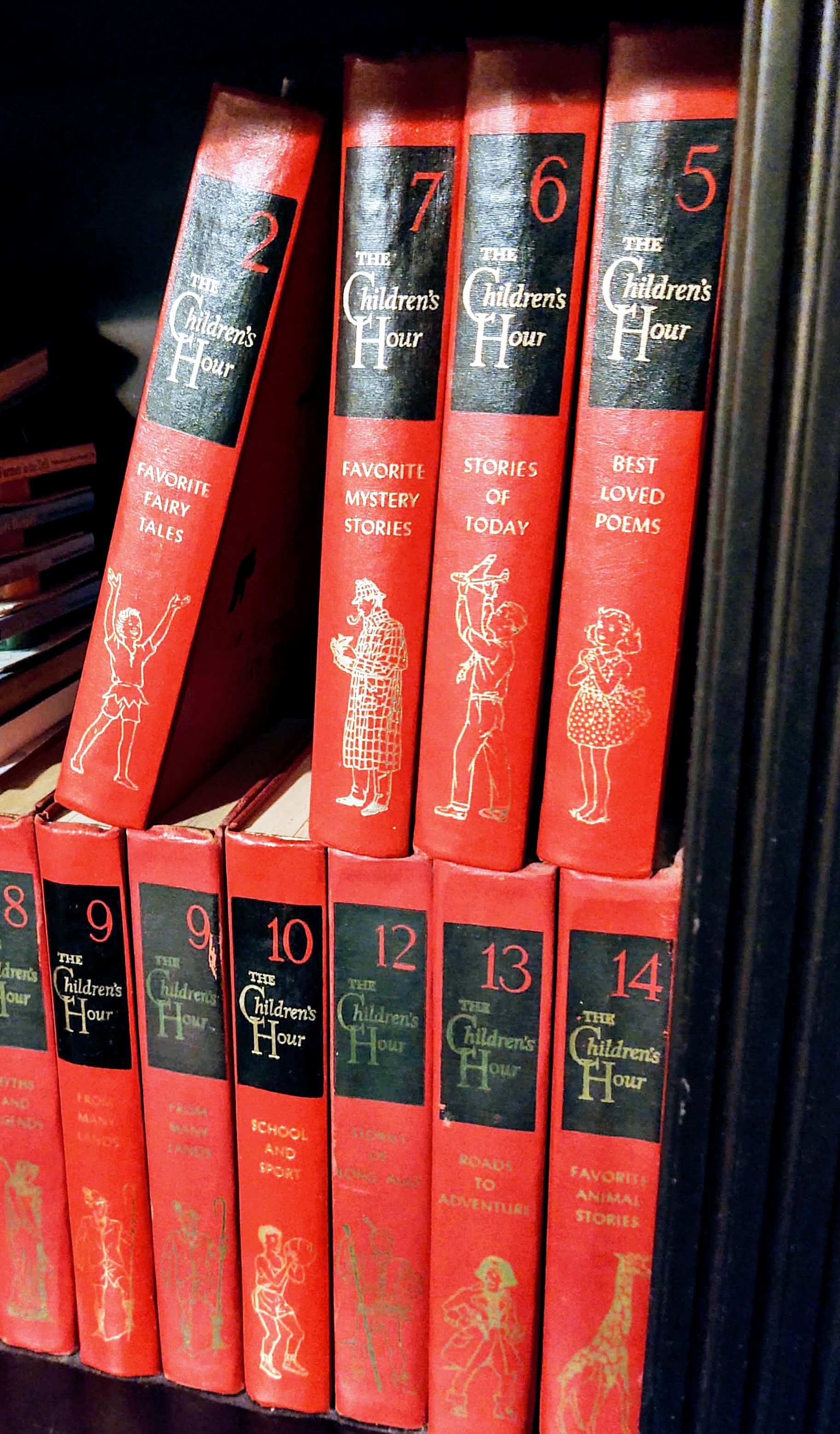
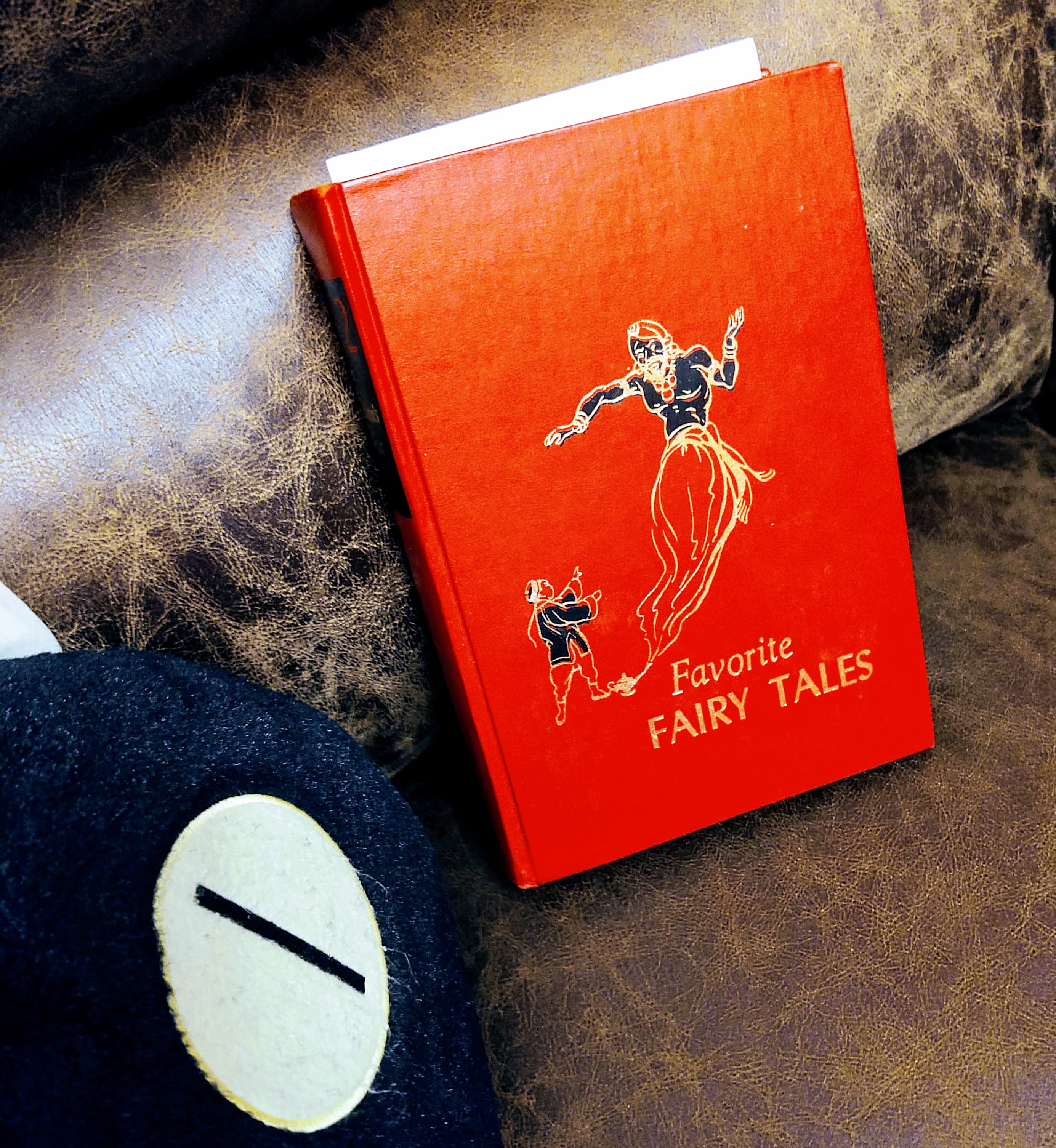
When I was younger I would scour my grandmother’s house for books to read. There was no Amazon then. There also weren’t that many book stores near by, so I read what I could find, which was old and varied, having been picked up here and there over the years. I often read through her Children’s Hour series. The thick red books occupy some of my earliest memories. My favorite being volume 2, Favorite Fairytales.

My favorite of the series

I still read them occasionally when the mood strikes me. And have added many more to my reading list over the years like Andrew Lang’s Fairy Books and the Brothers Grimm, to name a few. I picked those old red books up again when my daughter was younger, reading them to her when she was having trouble sleeping.

Since then, there have been more then a few stories that have taken root in my mind. Some are retellings (actually, re-imaginings would be a better term) of lesser known fairytales that I loved as a child or that caught my imagination as an adult. Some are stories spun up from my own fancies.

There is a book planned for next year, but I thought to post a few of those stories here beforehand, in an unedited form, while I work on the illustrations to go with them. It also gives me the chance to share some of the events and inspirations that led me to write them, for those of you who find such things interesting.

Look for the first one, Daughter of the Sea, to be posted in August.

Short answer, to have some place to put down the random thoughts and stories bouncing around in my head. Long answer… well there isn’t one.

You may see the occasional recipe or cat picture or book review as well. Don’t expect rhyme or reason, you are not likely to find it. I do hope you find a moment of diversion and derive as much enjoyment in the reading as I do in the writing.